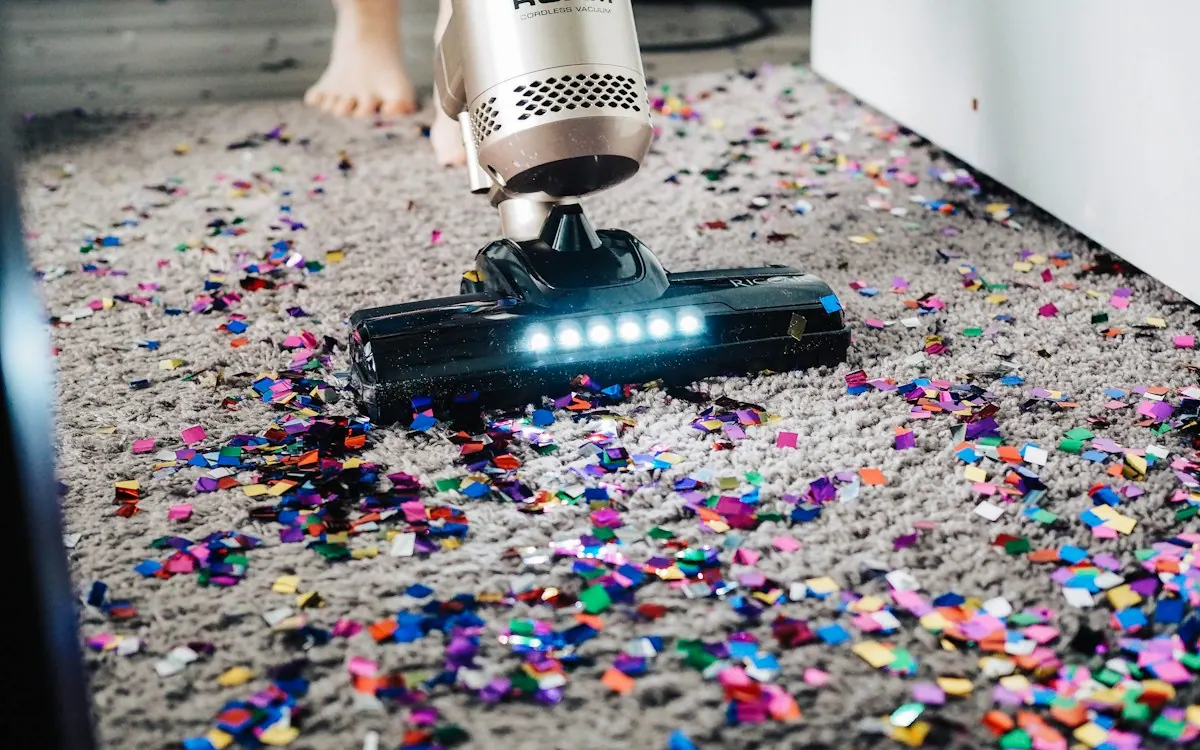
Robot Vacuums With Rugs and Kids Around: Honest Tradeoffs
An honest look at robot vacuums in homes with rugs, toys and kids, covering navigation, thresholds, bin size and the setup work nobody mentions.

It is 9:40 at night. A single plastic brick sits in the middle of the rug, the dog bowl is two feet away, and the robot is wedged under the sofa again, humming against a chair leg it has met before. Someone fishes it out, sets it back on its dock, and makes a mental note to pick up the floor first next time. By morning the note is gone. That loop — buy a clever machine, then spend a little human effort making the room safe for it — is the part listings rarely lead with.
Where a detail comes from a spec panel rather than a living room, it is described that way.
Quick verdict
In a home with mostly hard floors and low-pile rugs, a mapping robot with no-go zones is a useful daily crumb-clearer. It earns its keep between deeper cleanings, not instead of them. Households that stay happy are the ones willing to spend five minutes lifting toys and cables before a run.
The problem it actually solves
A robot vacuum is a maintenance tool. Its job is the light, frequent layer — crumbs under the table, dust in a hallway, tracked-in grit — that otherwise waits for the weekend. Manufacturers commonly describe scheduled runs and room-by-room cleaning in a companion app, and that framing is fair: the value is repetition, not power. It does not replace a deep clean, do stairs, or reach upholstery.
Best use cases
- Open hard floors with a clear path between rooms.
- Low-pile rugs with bound edges rather than long fringe.
- Households that can do a quick floor sweep before a scheduled run.
- Anyone who wants crumbs handled on a weekday rather than saved for Saturday.
Workflow fit
Here is the setup work nobody puts in the headline. Before the first mapping run, cables come up, chair legs get checked, toy bricks and pet bowls leave the floor, and a low sofa skirt gets tucked or blocked. In published product listings, no-go zones are commonly described as adjustable in a companion app, drawn after that first pass once a household sees where the machine gets caught. Then comes the loop: emptying the bin, wiping sensors, clearing hair from the brush.
Navigation, thresholds and rugs
Based on published specifications, navigation is generally listed as lidar-based or camera-based mapping, with obstacle avoidance described separately. Manufacturers commonly describe a maximum threshold or climb height in those specifications, and that is the figure that decides whether a raised rug edge or a doorway strip is a non-event or a nightly trap. Pile matters as much as height: a flat, bound low-pile rug is the calmer case, while shag, loose fringe and tassels belong behind a boundary. Onboard bin capacity is generally listed in the product specifications, and it belongs beside the size of the home.
Alternatives to consider
A cordless stick vacuum is the more direct answer for a small flat: it handles stairs, corners and a thick rug in one pass and needs no mapping. A traditional upright still wins for deep carpet. For a single room, a broom and a five-minute sweep is a real alternative — cheaper, silent, and unbothered by a plastic brick on the rug.
The tradeoffs that show up after the first week
Convenience is bought with preparation. A robot that is stuck is a robot that is not cleaning, and the things that trap it — cables, fringe, a low sofa, a pet bowl — are exactly what a busy household leaves out at night. Slimmer models fit under more furniture but are generally listed with smaller bins. Self-emptying docks add a larger base and a recurring bag to buy. Mapping and no-go zones ask for a companion app and a first clear run. Add an evening cycle’s noise and a charging base that wants a permanent wall, and the honest picture is a helpful appliance with conditions, not an autonomous cleaning service.
Who should skip it
If your floors are mostly deep-pile or shag rugs, the robot will spend more time stalled than working. If toys, cables and bowls live on the floor all day, the five-minute tidy becomes a daily argument. And if you want one machine that also cleans stairs, upholstery and the car, a robot is the wrong shape — put the budget toward a cordless or upright vacuum instead.
A short checklist before you buy
- Measure the clearance under your sofa against the listed body height.
- Check the maximum threshold or climb height in the specifications.
- Look at rug edges: bound and low-pile, or loose fringe and tassels.
- Confirm no-go zones are available and how they are set.
- Compare onboard bin capacity with the size of the home.
- Decide where the charging base will live permanently.
- Plan a five-minute floor tidy before scheduled runs.
The picks below group the category into the setups worth comparing rather than naming a single winner. Prices and bundles move, so check current price and availability on the retailer page before you commit, and read the navigation, threshold and bin details on the listing itself.
Picks worth comparing
These are product categories to compare, not a ranked list. Recommendations are based on published specifications and household fit. Check the retailer page for current price, size and availability.
Robot vacuum with lidar mapping and no-go zones
Best for mixed hard floors and low-pile rugs — Homes that want room-by-room runs and a way to keep the robot off a tasselled rug.
What to check
- Mapping and virtual boundaries are commonly described by manufacturers as adjustable in a companion app
- Lidar-based navigation is generally listed in published product specifications
Pros / tradeoffs
- No-go zones protect a play corner or a thick rug without moving furniture
- Room-by-room runs are easier to schedule around a bedtime tidy
- A mapping run needs a reasonably clear floor on the first pass
- App-based setup adds a step that not every household wants
Prices change often. Check the retailer for the current price and availability.
Self-emptying robot vacuum with a dock bin
Best for households that forget the bin — Busy homes where emptying a small onboard bin is the chore that gets skipped.
What to check
- A dock that transfers debris from the robot is commonly described in published product listings
- Onboard bin capacity is generally listed in the product specifications
Pros / tradeoffs
- Fewer hand-emptying trips between deeper cleanings
- Useful when crumbs and pet hair fill a small bin quickly
- The dock takes more floor space than a bare charging base
- Replacement bags are a recurring purchase to plan for
Prices change often. Check the retailer for the current price and availability.
Slim, low-profile robot vacuum
Best for low furniture — Rooms where a sofa or bed frame sits close to the floor.
What to check
- Overall body height is generally listed in published product specifications
- Manufacturers commonly describe a lower chassis as fitting beneath furniture
Pros / tradeoffs
- Reaches under pieces a taller robot cannot clear
- Less likely to wedge itself at a low clearance
- A slimmer body can mean a smaller onboard bin
- Still needs a tidy floor to avoid getting stuck on a toy
Prices change often. Check the retailer for the current price and availability.
Robot vacuum with a rubber main brush
Best for homes with hair and rug fringe — Households where long hair and rug tassels tend to wrap around a bristle brush.
What to check
- A rubber main brush is commonly described by manufacturers as resisting hair wrap
- Brush type is generally listed in published product specifications
Pros / tradeoffs
- Less time spent cutting hair off a roller
- Copes more calmly with fringe on a low-pile rug
- A rubber brush is not a cure for long fringe, which can still stop a run
- Replacement brushes still need to match the exact line
Prices change often. Check the retailer for the current price and availability.
Common questions
Thickness and pile are the issue, not the rug itself. Manufacturers commonly describe a maximum threshold or climb height in published product specifications, and deep-pile or shag rugs are generally the difficult case. A flat, low-pile rug with bound edges is the calmer bet, while loose fringe and tassels are worth keeping behind a no-go zone.
Yes. A robot is built for frequent light maintenance on open floor, not for stairs, upholstery or a deep clean along skirting boards. Most households keep a cordless or upright vacuum for the jobs a round machine cannot reach, and use the robot for the daily crumbs in between.
More than unboxing. Cables get lifted, toy bricks and pet bowls come off the floor, chair legs may need clearing, and the first mapping run wants the space reasonably empty. No-go zones are usually drawn after that pass in a companion app, then adjusted as a household learns where the robot actually gets caught.
That depends on the home rather than a fixed schedule. Onboard bin capacity is generally listed in the product specifications, and a household with pets or kids fills a small bin far faster than a quiet one. A self-emptying dock shifts the job to a larger bag, but both still need checking until a pattern emerges.