Cordless Stick Vacuums for Pet Hair in an Apartment
A buying guide to cordless stick vacuums for pet hair in small apartments, focused on storage, runtime, filters and hard-floor performance.
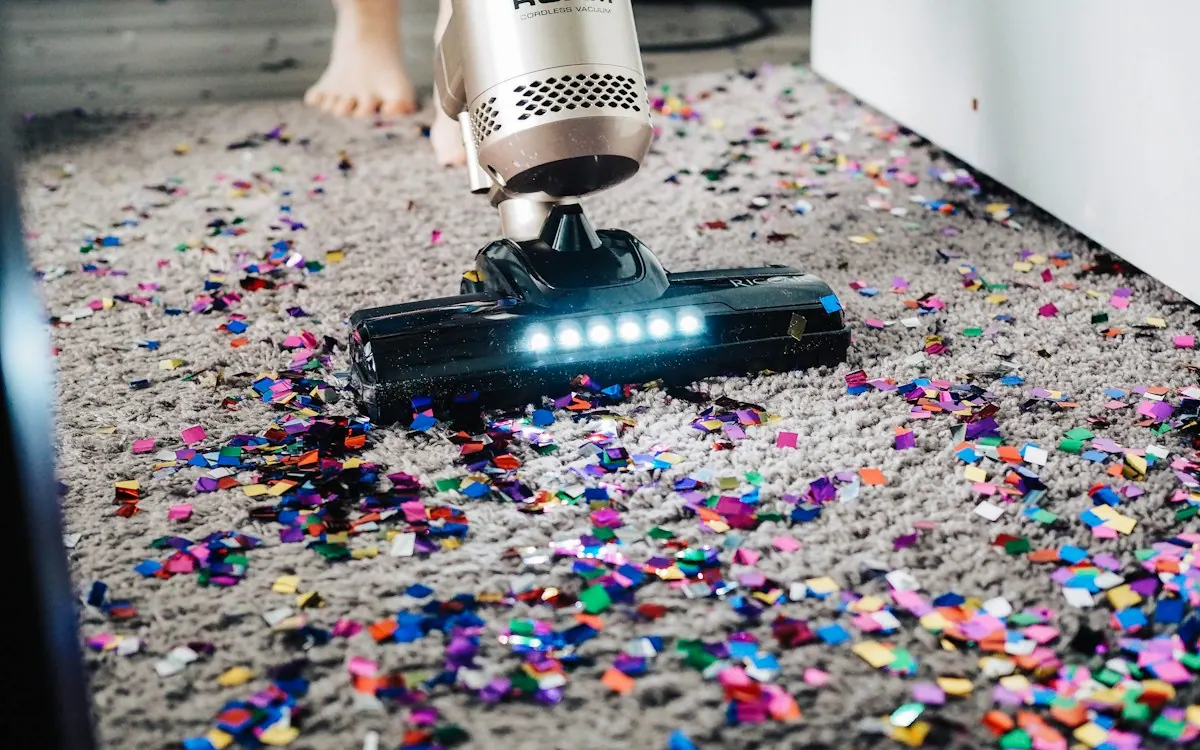
A shedding dog lives here, on the third floor of a walk-up with no lift. The front cupboard is about the width of an ironing board, so a full-size upright was never going to fit, and carrying anything heavy up two flights is a decision you make every day. Hair collects along the skirting boards and under the sofa by late afternoon. This is the reality behind most cordless-vacuum advice, which tends to be written for houses with a utility cupboard and a garage.
Cordless stick vacuums suit that reality well, but not all of them suit it equally. The interesting questions are not about peak suction; they are about where the machine lives, how far a charge gets you, how much dust escapes when you empty it, and how the head copes with hard flooring plus one low-pile rug. Specifications help with some of that and are silent on the rest.
The apartment constraints come first
Storage is the first filter. A stick vacuum that hangs on a wall-mounted dock occupies roughly the floor space of a dinner plate, while anything needing a freestanding base claims a corner you probably do not have. Stairs matter too: a machine you carry one-handed up two flights, dog behind you, gets used far more than a slightly more capable one needing two trips. Neighbours matter too: hard floors and a motorised head carry noise downward, so a lower-power hard-floor mode helps in a flat. Mixed floors are the rule: tile in the kitchen, laminate in the hall, a single rug under the coffee table. A head that shines on only one of those leaves you fetching a broom for the others.
Battery, filter and bin: the three tradeoffs
Runtime is generally listed per power mode. Based on published specifications, a standard-mode figure is often several times the maximum-mode figure, so the impressive headline number frequently belongs to a setting you would not use for a whole flat. A larger battery extends a session but adds weight, which is exactly what a walk-up punishes.
Filters come in washable and replaceable forms. Manufacturers commonly describe washable filters as reusable and rinseable, removing a recurring purchase but adding a drying interval where the vacuum is out of action. A sealed system with a filter is generally listed as keeping fine dust and hair from puffing back out during emptying — useful when you empty into a small kitchen bin rather than outdoors.
Bin capacity is the quiet one. Small bins keep a stick vacuum light and slim, but a shedding dog fills them quickly, and frequent emptying is the chore people underestimate. A sealed, one-touch release makes that cleaner; a larger bin makes it less frequent but adds bulk.
What published specifications can and cannot tell you
Specifications are good for boundaries. Listed weight, bin volume, quoted runtime per mode, battery capacity, filter type, included tools and dimensions will tell you whether a vacuum fits the wall spot, whether you can lift it, and whether a full pass plausibly fits one charge.
What they cannot tell you is fit with your rooms. How a head transitions from tile to a rug threshold, how much hair wraps a roller after a week with a heavy shedder, how the machine sounds to the flat below, and whether the bin release feels fiddly in a dim hallway are things manufacturers commonly describe only in ideal terms. Treat the numbers as a way to narrow the field.
The tradeoffs nobody puts on the box
Power, weight and runtime form a triangle, and a cordless stick vacuum always gives up one. Light and long-running means a smaller motor or a gentler default mode; strong maximum suction means a short clock and more time on the dock. Convenience has costs too: a wall dock needs a drilled mount, and a detachable handheld adds small parts to lose.
Who should skip it
If you have wall-to-wall deep carpet across a large area, a corded upright with a bigger bin will usually be less frustrating, and published runtime figures confirm why. If you want a whole home in one uninterrupted session, a battery will cut that short. And if you would rather seal dust in a bag than tap out a bin, the cordless stick format is built around the habit you dislike.
A short checklist before you buy
- Measure the wall spot or cupboard and confirm the dock or base fits it.
- Compare quoted runtime in standard mode with the minutes of a full pass of your flat.
- Check listed weight if you carry it up stairs.
- Confirm the floor head is described for both hard floors and your rug.
- Look for a sealed, one-touch bin and a filter you are willing to maintain.
- Check which tools are in the box for stairs, upholstery and skirting boards.
The picks below are the categories worth comparing first. Prices move constantly, so check current price and availability on the retailer page before you commit — and read the weight, runtime and included-tool details on the listing itself, since those vary between machines that look nearly identical in a photo.
Picks worth comparing
These are product categories to compare, not a ranked list. Recommendations are based on published specifications and household fit. Check the retailer page for current price, size and availability.
lightweight cordless stick vacuum with wall-mounted dock
Best for daily apartment sweeps — Quick daily passes where the vacuum needs to be grabbed, used and hung back up.
What to check
- Generally listed as a slim stick body that stores on a wall-mounted charging dock
- Commonly described as convertible to a handheld for stairs and furniture
- Typically sold with a motorised floor head and a crevice tool
Pros / tradeoffs
- A wall dock keeps floor space clear in a small flat
- Light enough to carry up a walk-up without a second trip
- Listed bin capacity is usually small, so a shedding dog means frequent emptying
- Maximum-power modes are generally listed as cutting runtime sharply
Prices change often. Check the retailer for the current price and availability.
cordless stick vacuum with tangle-resistant brush roll
Best for heavy shedders — Homes where long pet hair wraps around the roller after every pass.
What to check
- Brush roll is commonly described with a comb or tapered design that sheds wrapped hair
- Generally listed with a motorised head suitable for hard floors and low-pile rugs
- Often sold with a removable roller for cleaning
Pros / tradeoffs
- Less time cutting hair off the roller by hand
- Handles the daily tumbleweed of fur without constant stops
- Tangle-resistant designs are generally listed as less effective on deep carpet
- The roller still needs occasional removal and wiping
Prices change often. Check the retailer for the current price and availability.
compact cordless stick vacuum with sealed bin and washable filter
Best for containing dust at emptying — Apartments where emptying the bin happens over a small kitchen bin, not outdoors.
What to check
- Sealed bin and washable filter are commonly described as limiting dust released during emptying
- Filters are generally listed as rinseable and reusable
- Typically sold with a one-touch bin release
Pros / tradeoffs
- Keeps fine hair and dust from puffing back into a small room
- A washable filter avoids a recurring replacement purchase
- Washable filters must dry fully before refitting, which takes the vacuum out of action
- Sealed systems are generally listed as heavier than open-bin designs
Prices change often. Check the retailer for the current price and availability.
cordless stick vacuum with detachable handheld unit
Best for stairs and upholstery — Walk-ups with carpeted stairs, a sofa the dog claims, and a car to clean.
What to check
- Body is commonly described as detaching into a handheld with its own small head
- Generally listed with a lightweight wand and a compact charging base
- Often sold with an upholstery or mini-motorised tool
Pros / tradeoffs
- One machine covers floors, stairs, sofa and car without a second appliance
- Handheld mode suits the narrow treads of an apartment stairwell
- Handheld mode is generally listed as the shortest-runtime configuration
- Small attachments are easy to misplace in a flat with little storage
Prices change often. Check the retailer for the current price and availability.
Common questions
They are useful for the measurable things: listed battery capacity, quoted runtime per mode, bin volume, weight, filter type and which tools are in the box. They tell you how a vacuum is built and how big it is, which is enough to rule out a machine that will not fit a cupboard or a stairwell.
How a floor head behaves on your particular mix of tile, rug and thresholds, how much hair wraps around the roller in a real week, or how loud the machine sounds to a neighbour below. Manufacturers commonly describe performance in ideal conditions; the fit with a specific apartment is something specifications cannot capture.
Estimate the minutes of a full pass, then compare with the listed figure for standard mode, not maximum mode. Based on published specifications, high-power settings often cut quoted runtime substantially, so a number that looks comfortable on paper can be tight in practice.
It removes the filter replacement, but not the upkeep. Washable filters are generally listed as needing a full dry before refitting, and some machines still use a secondary filter that is replaced. Check the listing for how many filters there are and which are rinseable.