Hand Soap and Dispensers: The Small Bathroom Fix
A short, practical guide to hand soap formats and dispensers, covering pump reliability, refills, sink mess and counter space.
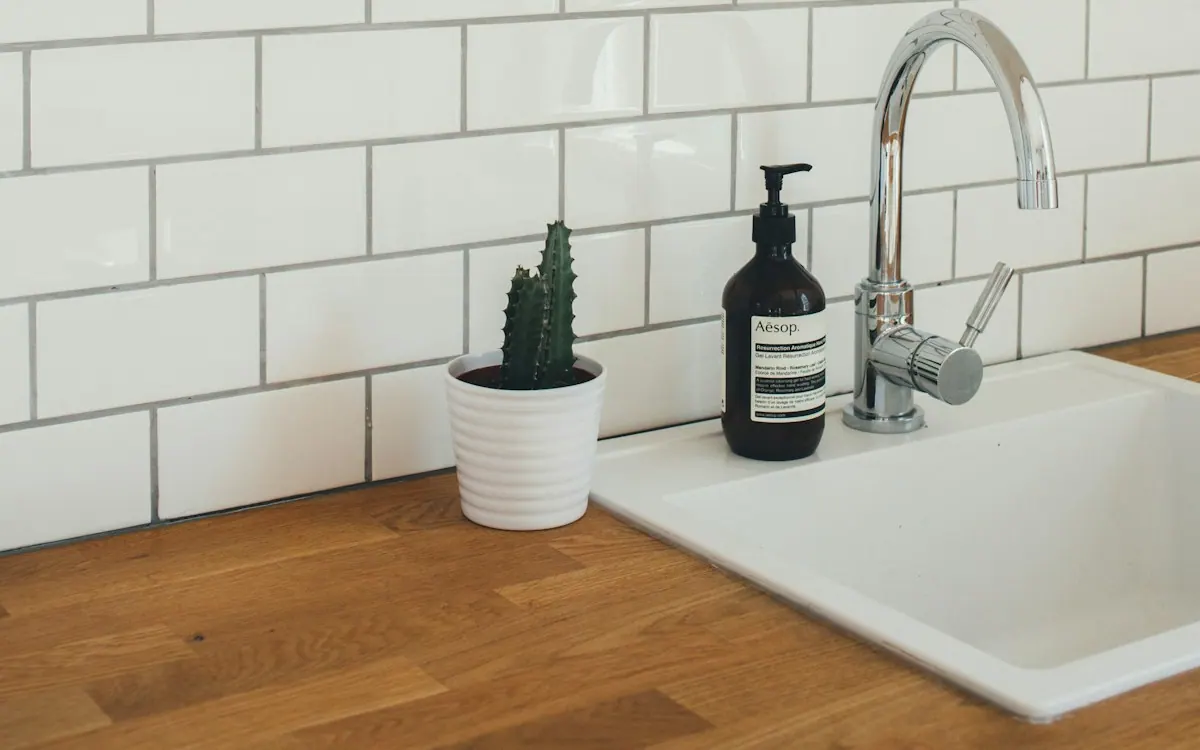
A pump drips after every use, a ring of dried soap sits on the sink, and a guest opens two cupboards before finding the bottle pushed behind the tap. These annoyances happen several times a day, and in a small bathroom the bottle also competes for the only few inches of counter the tap does not occupy.
Most of the frustration comes from the pump, not the soap. Here is how to choose a setup that stays tidy, refills without a production, and does not corrode next to a wet sink.
Liquid, foam, or bar
Liquid soap is the default and the easiest to refill from a larger bottle. It is generally listed as compatible with almost any standard pump, but a thick liquid tends to run down the bottle and leave the residue ring that started this search.
Foam is the same idea delivered as a lighter lather. A foaming pump is commonly described in published listings as mixing soap with air, and it is usually listed as needing a thinner, diluted soap or a dedicated foam refill. Because the dose is lighter, it tends to drip less, but the mechanism has more parts to rinse and thick liquid soap is generally listed as clogging it.
A bar is the lowest-tech option: one solid piece on a draining dish, no pump, no refill, and almost no footprint. It suits a tiny pedestal sink where a bottle will not fit, though it asks for a dish that genuinely lifts the bar off standing water.
The pump and the refill routine
When a dispenser fails, it is almost always the pump. In published product listings, metal or coated pumps are commonly described as more durable than all-plastic mechanisms, and the difference shows up where the spout meets the neck, which is where cheap pumps tend to crack or leak. A longer spout also directs soap into the hand rather than down the side of the bottle. Drips are often a dose problem rather than a defect: thick soap dispensed in a heavy blob keeps oozing after the press. A tray or coaster underneath catches what still escapes.
A disposable pump bottle is convenient until it is empty, at which point the whole thing is waste or an awkward refill through a narrow neck. Refillable bottles are commonly described in listings with a wide opening or a lift-off top, so a larger bottle can be poured in without a funnel. This is where the cheapest pump often costs more in mess: a flimsy mechanism that clogs, drips or snaps with repeated refilling leads to a wiped sink, a stained counter edge, and another bottle bought to replace it. A slightly better pump that keeps a clean dose is the less annoying purchase in the long run.
Counter space and material
On a small sink, the footprint is the deciding measurement. A stubby, weighted bottle takes less room than a tall one and is less likely to tip when pressed one-handed. If the counter is genuinely too narrow, a wall-mounted or adhesive dispenser is commonly listed as keeping the reservoir off the deck entirely, though adhesive ones are generally described as needing a smooth surface and a curing period, and refilling means lifting the unit off its bracket.
A wet sink edge is hard on metal. Chrome or stainless pumps and exposed metal collars are commonly described in listings as corrosion-resistant, while painted or plated finishes are generally noted for chipping where water sits. Ceramic and glass look tidy but are commonly listed as chippable on a hard rim. Whatever the body, a tray underneath is the cheapest insurance.
The tradeoffs nobody puts on the label
Refillable means fewer disposable bottles and more occasional rinsing of the mechanism. Foam means less dripping and a fussy soap consistency. A bar means the smallest footprint and a dish that needs draining. Wall-mounting clears the counter but complicates the refill. Every option trades one small chore for another; the right one is the chore this household will actually do.
Who should skip it
If the sink is wide, the residue has never bothered anyone, and sealed cartridges are preferred, there is no reason to change a working setup. If a closed vanity cabinet already hides the bottle, a decorative dispenser solves a problem that is not visible. And if drilling or adhesive on the only wall is not an option, keep the bottle on the deck with a tray.
A short checklist before you buy
- Decide liquid, foam or bar before looking at bottles.
- Look for a metal or coated pump and a longer, directed spout.
- Check that the opening is wide enough to refill without a funnel.
- Measure the sink edge against the bottle’s footprint.
- Add a tray or a draining dish to catch drips.
- For foam, confirm the listed soap consistency and refill type.
The picks below group the categories worth comparing first, from a refillable liquid dispenser to a foaming bottle and a simple bar dish. Prices move constantly, so check current price and availability on the retailer page before you commit, and read the pump material, refill opening and care details on the listing itself, since two dispensers that look alike in a photo can behave very differently at a wet sink.
Picks worth comparing
These are product categories to compare, not a ranked list. Recommendations are based on published specifications and household fit. Check the retailer page for current price, size and availability.
Refillable ceramic or glass liquid-soap dispenser
Best for a tidy sink — A small bathroom where the dispenser stays on the counter and gets refilled from a larger bottle.
What to check
- A screw- or lift-off top is commonly described in listings as allowing refills from bulk soap
- Metal or coated pumps are generally listed as more durable than all-plastic mechanisms
- Often sold with a wide opening that is easier to fill without a funnel
Pros / tradeoffs
- One permanent bottle instead of a stream of disposable ones
- A weighted base is less likely to tip when the pump is pressed
- Glass or ceramic can chip on a hard sink edge
- Needs a tray or coaster to catch drips
Prices change often. Check the retailer for the current price and availability.
Foaming soap dispenser with refillable bottle
Best for less residue — A sink where liquid soap tends to leave a ring or run down the bottle.
What to check
- A foaming pump is commonly described in listings as mixing soap with air to dispense a lighter lather
- Usually listed as requiring a thinner, diluted soap or a dedicated foam refill
- Often sold with a matching refill concentrate
Pros / tradeoffs
- A lighter dose that tends to leave less dripping on the sink
- A little soap goes further, so refills are less frequent
- Needs the right soap consistency; thick liquid soap is generally listed as clogging the foaming mechanism
- The pump has more parts to rinse out between refills
Prices change often. Check the retailer for the current price and availability.
Bar soap with a draining dish
Best for almost no counter — A tiny pedestal sink where a bottle simply does not fit.
What to check
- Slatted, ridged or angled dishes are commonly described in listings as lifting the bar off standing water
- Usually a single low piece that sits beside the tap
- Ceramic, silicone and bamboo versions are all commonly listed
Pros / tradeoffs
- The smallest footprint and no pump to fail
- No plastic bottle and nothing to refill
- Needs a dish that actually drains or the bar softens
- Some people dislike a shared bar in a guest bathroom
Prices change often. Check the retailer for the current price and availability.
Wall-mounted or adhesive liquid-soap dispenser
Best for freeing the counter — A sink where the counter is too narrow for a bottle at all.
What to check
- Adhesive or screw-mounted brackets are commonly described in listings as keeping the bottle off the deck
- Usually listed with a removable reservoir for refilling
- Often sold for both adhesive and drilled installation
Pros / tradeoffs
- Clears the sink edge completely
- Drips fall into the basin rather than onto a shelf
- Adhesive versions are generally listed as needing a smooth surface and a cure time before use
- Refilling means lifting the unit off its bracket
Prices change often. Check the retailer for the current price and availability.
Common questions
Usually a dose problem rather than a defect: thick liquid soap dispensed in a heavy blob keeps oozing after the press and runs down the bottle. A lighter foam, a longer directed spout, or a pump with a smaller stroke generally leaves less behind. A tray underneath catches what still escapes.
Not as a rule. A foaming pump is commonly described in listings as expecting a thin, diluted soap or a dedicated foam refill, and straight liquid soap is generally listed as clogging the mechanism or stopping the foam. Thin the soap properly or buy the matching refill.
A foaming dispenser with a tray underneath tends to drip least, and a wall-mounted bottle keeps the residue off the counter entirely. A bar on a draining dish is the smallest footprint, though some households prefer not to share a bar with guests.
Reduce the dose, direct the spout into the hand rather than down the bottle, and put a small tray or coaster under the dispenser so drips land on something that lifts out for rinsing. Wiping the neck of the bottle when refilling helps too.